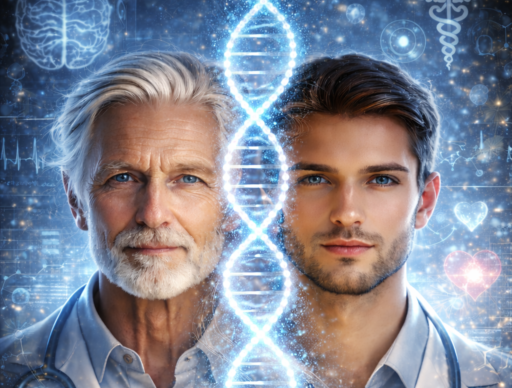
Explore our educational and research resources.
Here you can find documents, presentations, and videos shared by experts in the biomedical field.
Access may require registration and login.
SCIENCE & RESEARCH FOCUS
🧬 From Cell & DNA to Lifespan
Aging begins at the cellular level. DNA integrity, epigenetic regulation, mitochondrial function, and cellular communication all influence how tissues and organs age over time. Our research focuses on how these mechanisms interact across the entire human system.
🔬 Whole-Organ Rejuvenation
Aging is not only about individual cells. Organs age as integrated systems. We study how signaling pathways, immune balance, vascular health, and tissue architecture contribute to organ-level decline — and how these systems might regain function.
OUR APPROACH
Data-Driven
We analyze patterns, probabilities, and long-term biological trends using established and emerging scientific frameworks.
Research-Oriented Framework
Our work is exploratory and educational, designed to contribute to the broader understanding of aging also, offering medical treatment.
🧬 DNA Repair
A 2025 study in Science identified a DNA repair mechanism in naked mole-rats that enhances genome stability and delays cellular aging by boosting repair capacity, providing a promising target for longevity research.
🧠 Epigenetic Age Clocks
Published in Nature Reviews Genetics (2025), researchers refined the statistical foundations of epigenetic aging clocks—instruments that use DNA methylation patterns to estimate biological age and provide insights into individualized aging processes.
🔬 Multi-omics Aging Patterns
A 2025 multi-omics aging analysis integrating transcriptomics, lipidomics, metabolomics and microbiome data revealed distinct biological subtypes of human aging, highlighting the power of comprehensive molecular profiling for personalized longevity assessment.
📊 Longevity Biomarkers
In late 2025, Nature Aging published organ-specific proteomic aging clocks that accurately predict disease risk and mortality across diverse populations, demonstrating that protein-based biomarkers may serve as robust indicators of aging and longevity.